
Koh Kong: choose between the town, rivers, forest and islands
Koh Kong is both a province and the familiar name of its mainland provincial town. Koh Kong Island is a separate destination. Understand that geography first, then choose accommodation around the experience you want.
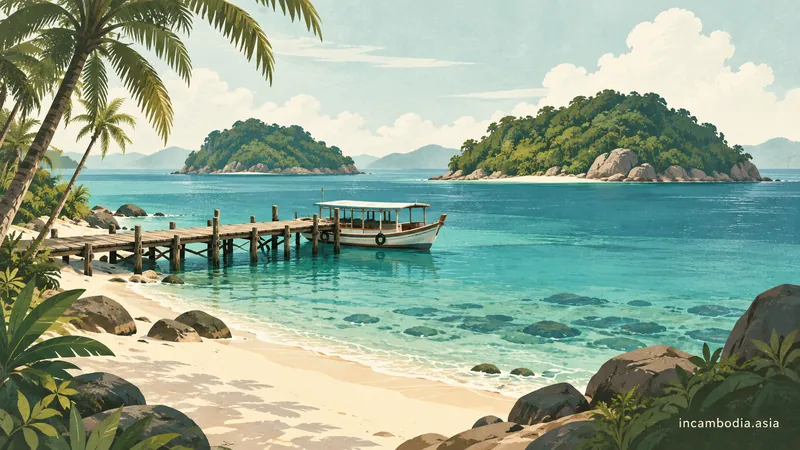
Original planning guide based on the linked sources. Property mentions are a researched shortlist, not a stay review or a guarantee of availability. Confirm current room details, transfers and activities directly.
Sources checked 2026-10-05A mainland base near Thailand
Koh Kong province lies in Cambodia’s southwest beside Thailand. The mainland town is useful for practical services and regional journeys, while river lodges and forest projects offer a different kind of stay. A hotel labelled Koh Kong may be in town, on the Tatai River or elsewhere in the province. Ask for its actual location and arrival instructions. Do not assume that a room in the province is on Koh Kong Island, or that the province is the same place as Koh Rong.
Five lodging leads across different settings
Apex Koh Kong Hotel identifies its address in the town’s Smach Mean Chey area and is a practical mainland lead. Canvas & Orchids Retreat offers a Tatai River stay with tented accommodation. Rainbow Lodge is another Tatai accommodation lead to contact directly about current operation and access. Thansur Tatai Eco Resort publishes traditional wooden-villa accommodation at Koh Andet. Cardamom Tented Camp is a forest-camp option in Botum Sakor National Park, with a different arrival plan and activity focus. These properties are spread across the province: they are not five neighbouring hotels.
Town, mangrove and river days
From a town base, consider a day built around the Peam Krasop area, whose mangrove walkways and nature tourism are described by Cambodia’s coastal authority. Ask locally which entrances, boardwalks and boat trips are currently operating. A Tatai stay puts the river at the centre of the day; a forest camp makes guided activities central. Trying to cover mangroves, a waterfall, a distant island and a mountain walk in one day usually sacrifices the very atmosphere that makes the region attractive.
Plan the border separately from the holiday
Travel note checked 5 October 2026: UK FCDO advice says land crossings between Cambodia and Thailand remain suspended and advises against all but essential travel within 20 kilometres of the Thai border. Do not book Koh Kong as an available overland connection to Thailand. Check the latest official advice, your exact destination and transport arrangements before committing. Inland river and forest properties have different locations; assess the actual itinerary rather than the province name alone.
Give the province enough time
A first visit can pair one practical town night with two nights at a river lodge, or focus on a single forest project for a more coherent stay. Chi Phat deserves its own time rather than being treated as an incidental stop between hotels. For residents returning to the province, switching the type of base can reveal a different landscape without a complicated multi-stop trip. Ask each host what is realistic from its specific location and what should be reserved ahead.
Understand the appeal without promises
Koh Kong combines estuaries, mangroves, rivers, mountains and offshore destinations. Some experiences require guides, boats or advance permission; others are simple village and riverside days. A claim of untouched wilderness should not replace clear information about access, communities and conservation. Choose a stay with transparent arrangements and allow the weather to influence the activity programme. Seeing fewer places well is often the best way to understand this large and varied province.
Sources and resources
- Cambodia coastal authority: Koh Kong tourism
- Apex Koh Kong Hotel
- Canvas & Orchids Retreat
- Rainbow Lodge, Tatai
- Thansur Tatai Eco Resort: rooms
- Cardamom Tented Camp
- Chi Phat community ecotourism
- UK FCDO: Cambodia travel advice, checked 5 October 2026
Consult the sources for their current information.
Planning a trip with this guide?
Tell us about your accommodation, transport or local experience needs in a private enquiry. This guide will be recorded as your starting point.